Intergenerational Legacy
The Journey CollectionIntergenerational Legacy names the novel’s movement of family memory and responsibility across three generations. Football provides its most visible language: Russ McCoy first carried Travis McCoy into the world of the game, Travis later carries Max into the same stadium, and Max recognizes the repetition as a family tradition. Yet the inheritance is not limited to sport. It includes Loralie McCoy’s encouragement, Russ’s belated confession of love, Travis’s decision to remain present for Max, and the family rituals that finally turn biological connection into an acknowledged household.
Definition and Family Pattern
Intergenerational Legacy operates through both continuity and correction. Travis inherits a deep attachment to football from childhood, but he also inherits the wound of a father who seemed absent while Loralie McCoy was dying. His adult life therefore tests what should be carried forward and what must end with him. The legacy that emerges is active rather than merely genetic: a parent gives time, remembers promises, creates shared rituals, and makes a child’s belonging visible.
The novel repeatedly places inherited memory beside present action. Travis’s professional identity has made him famous, but the decisive form of inheritance is found in private and communal relationships rather than celebrity. His return to Texas begins a movement from public recognition toward family membership, allowing the meaning of his football life to be measured by whom he brings into it and what kind of father he chooses to become.
Football as Inherited Memory
At the Darrell K. Royal Texas Memorial Stadium, Travis gives Max more than a privileged view of a game. He uses his University of Texas connection to obtain seats behind the team and on the fifty-yard line, while Max leans toward the field with trembling excitement. The setting activates Travis’s own childhood memory: when he was young, Russ took him to his first game, where they sat halfway up the stands in cold weather and light rain, wrapped in blankets and drinking small sips of hot cocoa. Russ remembers that the outing nearly ended in pneumonia and that Travis missed almost a week of school, but Travis remembers the larger result—that the experience was worth it because it was where he began to love football.
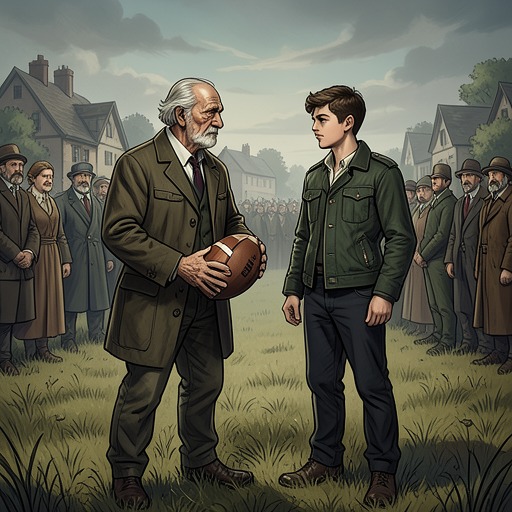
The emotional force of the scene comes from its repetition with a changed arrangement. Travis once watched the Broncos win a title beside his father; now Max watches his first game in the stadium beside his father. Max identifies the pattern directly, and Travis accepts it as a family tradition. The same place thus holds two versions of fatherhood: Russ’s earlier act of bringing Travis into the game and Travis’s present effort to give Max the memory he almost lost. The stadium becomes an archive in which family history is not simply recalled but deliberately continued.
Travis also imagines a future extension of this sequence. While explaining how teammates learn to read one another’s movements, he tells Max that the boys may return to the stadium years later with Travis watching Max play on the field. When Max says he could be just like Travis, Travis redirects the inheritance: Max should be himself, because he is already perfect as he is. The legacy therefore contains resemblance without demanding duplication. Football can connect the generations, but it need not erase the child’s separate identity.
Maternal Memory and Paternal Repair
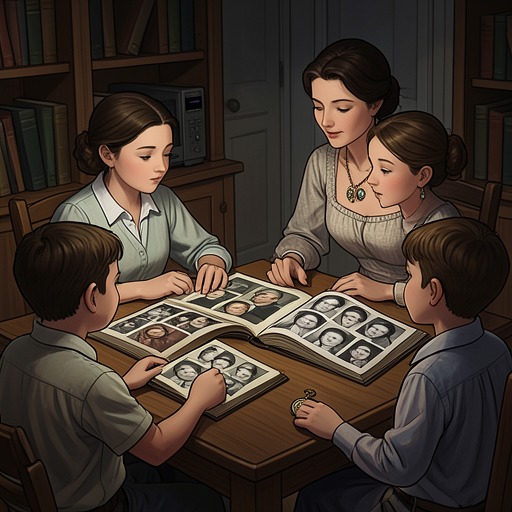
Loralie McCoy’s influence survives through recorded images and remembered words. In an old home movie, a young Travis, no more than nine years old, runs around a field in football pants and asks his mother whether she will record all his games when he becomes a professional player. Loralie answers that she will be on the fifty-yard line, cheering as loudly as she can. The recording preserves a promise that illness prevented her from fulfilling in the ordinary way. Her voice nevertheless remains part of Travis’s football origin, making his ambition inseparable from maternal encouragement.
That memory is painful because Loralie died after Acute Lymphoblastic Leukemia weakened her through two years and numerous rounds of chemotherapy. Travis was nine when she was diagnosed and eleven when she died. He remembers watching her fight to rise from bed, hearing her plead with God, and feeling that Russ abandoned her by retreating into his workshop. His anger shows that legacy can be transmitted as grievance as well as love: the child inherits not only the family’s attachments but also its unresolved account of who failed whom.
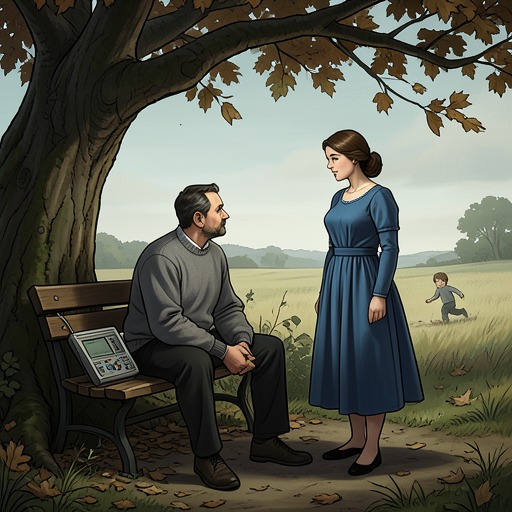
Russ’s letter changes the meaning of the paternal past by supplying a memory Travis never possessed. He recalls that when four-year-old Travis begged to ride the tractor, he initially intended to postpone the promise because work mattered more to him. Loralie warned him that the boy would be grown and gone before he knew it. The next morning, Russ found a picture of himself clenched in Travis’s sleeping hand, took the child into the field, and let him sit on his lap while he worked. He tells Travis that he has always been proud of him and that Loralie would be watching him with both a smile and a tear.
The letter does not erase the years of hurt, but it gives the inheritance a fuller shape. Russ’s admission reveals a father capable of tenderness, regret, and changed attention, while Travis’s willingness to read the letter aloud with Max marks a new form of witnessing. A family secret or silence becomes a shared story. The son who once judged his father only through abandonment can now receive evidence of love; the grandson hears that love as part of his own family history.
From Public Role to Present Fatherhood
The legacy theme also governs Travis’s transition from professional athlete to family-centered adult. At the airport, his six years in professional football make him recognizable to admirers seeking autographs, while the Miami Sharks remain expected contenders. His injured shoulder, however, means that he may not even be able to stand on the sidelines and watch them become champions. The public identity that once seemed permanent is already becoming unavailable.
When Stewart Thornton offers him a coaching position, the offer appears to preserve his connection to the Sharks and to the game that has defined him since childhood. Travis acknowledges that football had been his life and that he once dreamed of standing in the largest stadiums while crowds chanted his name. He also recognizes that his future has changed. Returning to Texas has shown him that Penelope Stone and Max are not a temporary interruption in his career but the people who love him and need him. Declining the coaching offer converts professional loss into an ethical choice: he will inherit football’s discipline and communal meaning without allowing the sport to consume his family life.
His former teammates ask whether he will regret leaving, imagining him at home while the Sharks win a championship. Travis answers that he is happy and says it is time to move on, even though he will miss the men who supported him. His departure is therefore not a rejection of the team’s value. It is a transfer of loyalty. The belonging once supplied by teammates and stadiums is redirected toward Penelope and Max, while his accumulated authority later becomes useful in teaching and guiding younger players.
The return to Clarendon makes this transformation visible in public. At the high school gymnasium, Travis hears the fight song and the roar of students, fans, and parents. The packed bleachers, maroon, white, and silver pompoms, varsity jerseys, and handmade posters restore the setting of his youth, where he had both hated and loved the attention. When he leads the team through the inflatable tunnel, the band plays and the crowd rises. At midfield, he tells the players that their community’s cheers are earned by their hard work and that they should be proud of the men they have become. His authority now comes not from being the athlete celebrated by the crowd, but from helping the next generation understand what the crowd’s faith requires.
Rituals of Belonging and Continuation
Intergenerational Legacy becomes institutional as well as emotional through naming, marriage, and family ceremony. Travis asks Penelope to change Max’s last name legally to McCoy because he wants the child to share the family name if they are going to become a real family. Penelope agrees, and the proposed change joins several forms of identity that had remained separate: Max’s biological connection to Travis, his social place beside Travis and Penelope, and his legal designation.
The wedding completes that movement through a public ritual. Travis and Penelope exchange vows and rings, then bring Max between them to light the eternity candle together. The three-person act matters because it refuses to treat the marriage as an arrangement involving only two adults. Max is made a visible participant in the family’s founding ceremony. The legacy is thus deliberately assembled: inherited blood, remembered ancestors, chosen commitments, and public recognition converge in one household.
The later ultrasound revelation extends the pattern toward another generation. Russ lifts the silver picture frame containing an ultrasound photo and reacts with overwhelming emotion, while Max jokes that he was not going to say anything. The family’s response turns an image of an unborn child into a shared event, linking the older generation, the reunited couple, and Max’s emerging position as an older brother. The future child is welcomed through the same network of memory and affection that has already reshaped Travis’s understanding of fatherhood.
Narrative Significance
The novel’s legacy is ultimately redemptive because it does not present family tradition as fate. Travis repeats Russ’s most loving gesture by bringing his own child into football, but he also corrects the absence that once defined his childhood by choosing to be present for Max. Loralie’s recorded promise, Russ’s letter, the stadium visit, the legal name change, the wedding candle, and the ultrasound frame form a chain of objects and rituals through which private feeling becomes transmissible knowledge.
What passes between the generations is therefore more than a surname or an athletic talent. It is the possibility of being seen before time runs out, of keeping promises instead of postponing them, and of turning inherited pain into care. Max’s resemblance to Travis matters less than Travis’s insistence that Max remain himself. In that distinction lies the concept’s decisive significance: a family honors its past most fully when it carries forward love while refusing to reproduce abandonment.